Gould's Wild Turkey | Online Record Book Preview
This is a preview of the Gould's Wild Turkey species only.
Once you subscribe you will be able to view all the entry details for hundreds of different species, including full score sheets and photos.
Gould's Wild Turkey - Species Detail |
| AKA: |
|
Gold: |
38 4/16" |
Gold (Bow): |
20 6/16" |
| Endangered: |
|
Silver: |
32 8/16" |
Silver (Bow): |
0" |
| Bronze: |
24" |
Bronze (Bow): |
0" |
|
Meleagris gallopavo mexicana
Gould's were first described by J. Gould in 1856.
DESCRIPTION The Gould's turkey is the largest of the five subspecies and resembles the Merriam's turkey. They have longer legs, larger feet, and larger center tail feathers than any of the other wild turkey subspecies. Gould's differ by having distinctive white tips on the tail feathers and tail rump coverts which usually separate to show an "eyelash" appearance. The Gould's also has more tail feathers than the other subspecies with 20 and sometimes 22 tail feathers.
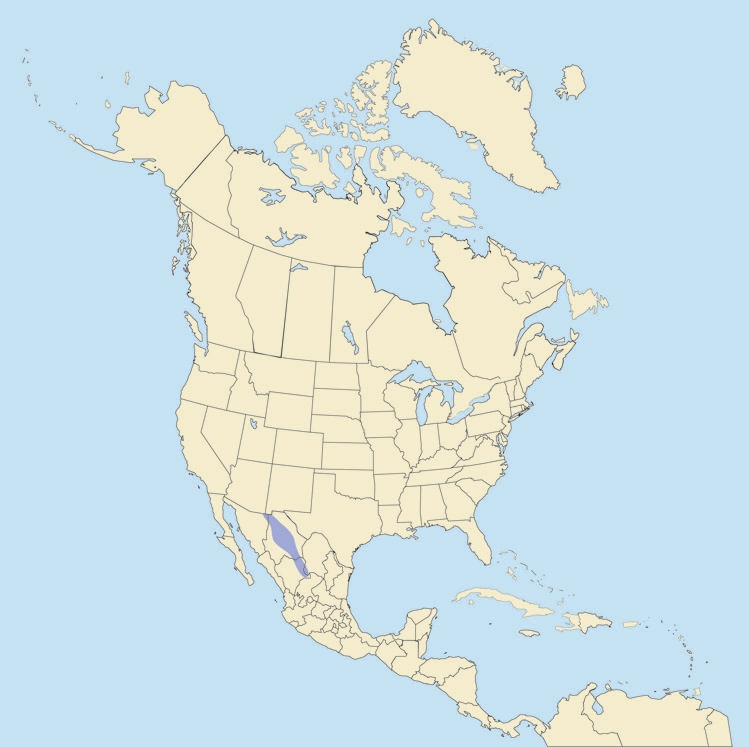
DISTRIBUTION The Sierra Madre Occidental Mountains in Mexico are the center of the Gould's turkey Mexican range, extending south from the US-Mexico border. Populations exist in Chihuahua, Sonora, Sinaloa, Durango, Zacatecas, Nayarit, Jalisco, and Coahuila. In the United States, Gould's turkeys are found in the Animas and San Luis Mountains of New Mexico and in the Peloncillo Mountains of New Mexico and Arizona.
|
| Member |
Taken |
Location |
Hunting Company/Guide |
Measurer |
MOK |
Score |
OR |
MR |
The Gould's Wild Turkey currently has 117 Entries listed in the SCI Record Book!
Once you subscribe you'll be able to access photos and full socre sheets for all of these entries. Plus you can filter, sort, and search through all species and entries in the SCI database. If you would like to subscribe now to have access to the entire database, please click here.
|
Return to Top
|



 LOGIN
LOGIN